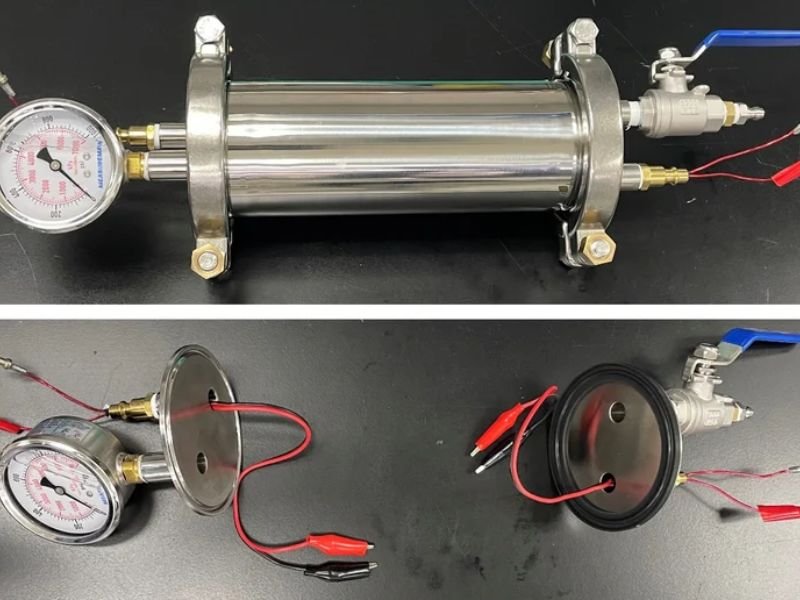
Isostatic Pouch Cell Testing Vessel technology plays an important role in controlled battery research and testing. As battery development continues to grow, researchers and manufacturers need reliable equipment to study pouch cells under controlled pressure and temperature conditions. Ampcera provides useful technology-focused content for businesses and readers researching advanced battery equipment and materials. A suitable testing vessel can help create controlled laboratory conditions and support repeatable experiments. When choosing equipment, users should consider pressure range, temperature control, chamber design, safety features, material compatibility, and testing requirements. Understanding these factors can help research teams select equipment that matches their project goals. This guide explains the basic purpose of specialized pouch cell testing vessels and the key points to consider before choosing equipment for battery research.
What Is an Isostatic Pouch Cell Testing Vessel?
An Isostatic Pouch Cell Testing Vessel is specialized equipment used to provide a controlled environment for testing pouch-type battery cells. Isostatic pressure means pressure is applied more evenly around the test sample rather than being concentrated from one direction.
This type of controlled testing can help researchers study how pouch cells behave under different physical conditions. Depending on the equipment design, the vessel may be used with controlled pressure, temperature, or other test conditions.
Why Is Controlled Testing Important?
Battery cells can respond differently when their surrounding conditions change. Researchers may need to study performance, durability, safety, and physical changes during charging and discharging.
A controlled testing environment can help reduce unwanted variations and make test results easier to compare.
How Does an Isostatic Pouch Cell Testing Vessel Work?
The exact operating method depends on the equipment design. In general, a pouch cell is placed inside a pressure chamber or suitable testing space. The vessel is then operated according to the required test conditions.
The system may allow researchers to control specific parameters while monitoring the cell during the experiment.
Important Testing Factors
Researchers may need to monitor:
- Applied pressure
- Temperature
- Charging and discharging conditions
- Cell voltage
- Current
- Test duration
- Cell expansion
- Physical changes
- Safety conditions
The combination of these measurements can provide useful information about cell behavior.
Why Use an Isostatic Pouch Cell Testing Vessel for Battery Research?
Battery research often requires controlled and repeatable conditions. An Isostatic Pouch Cell Testing Vessel can provide a specialized environment for studying how pouch cells respond to pressure and other controlled variables.
Pouch cells are widely studied because their flexible packaging can allow visible changes in cell thickness or expansion during operation. Controlled testing can help researchers investigate these changes.
Potential Research Applications
Specialized vessels may support research involving:
- Battery cell performance
- Cell expansion studies
- Pressure-related experiments
- Thermal testing
- Durability research
- Material evaluation
- Safety studies
- Solid-state battery research
The exact application depends on the vessel’s specifications and the research setup.
What Should You Consider Before Choosing an Isostatic Pouch Cell Testing Vessel?
Choosing laboratory equipment requires careful attention to technical requirements. An Isostatic Pouch Cell Testing Vessel should match the intended testing conditions and the type of battery cells being studied.
Pressure Range
Pressure capacity is one of the most important specifications. Researchers should identify the pressure range required for their experiments before selecting equipment.
The vessel should be designed and rated for the intended operating conditions.
Temperature Control
Some battery experiments require temperature-controlled testing. Researchers should check whether the equipment supports the required temperature range and how temperature is controlled or monitored.
Chamber Size
The internal chamber should provide enough space for the pouch cell and any required sensors, fixtures, or testing components.
A suitable chamber design can make installation and testing easier.
Safety Features
Battery testing can involve electrical, thermal, and pressure-related risks. Equipment should include suitable safety features for the intended application.
Researchers should carefully follow the manufacturer’s operating instructions and laboratory safety procedures.
How Can an Isostatic Pouch Cell Testing Vessel Support Repeatable Testing?
Repeatability is important in research. When experiments are performed under controlled conditions, researchers can compare results more effectively.
An Isostatic Pouch Cell Testing Vessel can help establish consistent environmental conditions around the test cell. This can be useful when researchers want to compare different cells, materials, or test cycles.
Consistent Test Conditions
Researchers can improve consistency by controlling factors such as:
- Pressure
- Temperature
- Charge rate
- Discharge rate
- Test duration
- Initial cell condition
- Measurement methods
Keeping these factors consistent can make experimental results easier to interpret.
What Questions Should You Ask Before Buying?
Before purchasing an Isostatic Pouch Cell Testing Vessel, research teams should ask detailed technical questions.
Useful questions include:
- What pressure range does the vessel support?
- What temperature range is available?
- What chamber dimensions are provided?
- What type of pouch cells can be tested?
- How is pressure monitored?
- How is temperature measured?
- What safety features are included?
- Can sensors be installed inside the testing system?
- What documentation is supplied?
- Is technical support available?
Clear answers can help buyers compare equipment more effectively.
Materials and Construction of an Isostatic Pouch Cell Testing Vessel
The construction of a testing vessel is another important consideration. The materials used should be suitable for the expected pressure, temperature, and laboratory environment.
Manufacturers may use specialized metals, seals, fittings, and viewing or measurement components depending on the vessel design.
Why Material Selection Matters?
A testing vessel needs to maintain its structural integrity during operation. Seals and connections also need to perform reliably under the intended conditions.
Researchers should review the manufacturer’s specifications rather than assuming that one vessel design will work for every application.
Isostatic Pouch Cell Testing Vessel for Advanced Battery Development
Modern battery research includes lithium-ion batteries, solid-state batteries, and other emerging technologies. Researchers are studying new materials and cell designs to improve energy density, safety, cycle life, and performance.
An Isostatic Pouch Cell Testing Vessel can be useful when a project requires controlled pressure or environmental testing of pouch-format cells.
Supporting Next-Generation Battery Research
As battery technology develops, testing equipment also needs to meet more specialized research requirements. Advanced laboratory equipment can help teams investigate how cells behave under carefully controlled conditions.
However, the equipment should always be selected according to the specific research objective rather than simply choosing the most advanced system available.
How Can Ampcera Help With Technology Information?
Ampcera can provide a platform for sharing simple and useful information about technology, products, and research topics. Readers researching battery equipment can use educational content to understand important terms and questions before speaking with equipment manufacturers.
When evaluating an Isostatic Pouch Cell Testing Vessel, technical specifications should always be confirmed directly with the equipment manufacturer or supplier.
This helps ensure that the selected system is suitable for the intended laboratory application.
Tips for Selecting Battery Testing Equipment
Choosing battery testing equipment becomes easier when the research requirements are defined first.
Consider these steps:
- Identify the type of battery cell.
- Define the required pressure range.
- Determine the temperature requirements.
- Check chamber dimensions.
- Review safety requirements.
- Identify required sensors.
- Compare technical specifications.
- Review documentation.
- Ask about technical support.
- Confirm compatibility before purchasing.
This approach can help research teams avoid choosing equipment based only on price or appearance. Battery testing requires carefully controlled conditions, reliable equipment, and clear measurement methods. An Isostatic Pouch Cell Testing Vessel can provide a specialized environment for studying pouch cells under controlled pressure and other test conditions. Researchers should consider pressure capacity, temperature control, chamber size, construction, safety features, monitoring options, and technical support before selecting a vessel. It is also important to match the equipment to the specific battery chemistry, cell design, and research objective. Ampcera aims to make technical topics easier to understand by presenting information in a simple and practical format. For organizations exploring advanced battery testing, understanding the role and specifications of an Isostatic Pouch Cell Testing Vessel can be a useful first step toward selecting suitable laboratory equipment and planning reliable battery research.